
Hyperscalers, heavy industry, and the NRC.
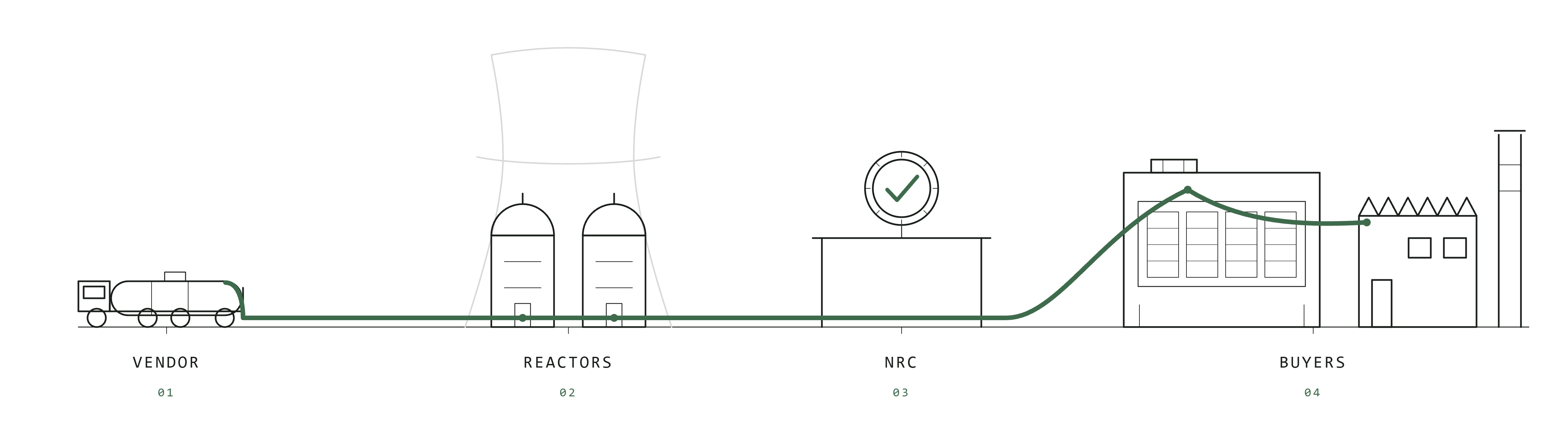
The cast list is new. The buyers are Microsoft, Amazon, Dow, Nucor — not utilities. The vendors are NuScale, X-energy, GE Hitachi, TerraPower — most of them haven't built a commercial unit yet. The regulator is the NRC, working through a new framework while the deal flow accelerates around it. Every seat at the table is filled by someone the industry has barely worked with before.
The most overlooked thing about the SMR moment is who’s actually doing the work. The participants are not the people who built America’s last reactor fleet. The buyers used to be regulated utilities with rate-base recovery and decades of nuclear operating history. Now they’re hyperscalers with multi-decade compute demand curves and balance sheets that can underwrite twenty-year industrial PPAs without state approval.
The vendor side has flipped too. The companies racing to be first to commercial deployment — NuScale, X-energy, TerraPower, Kairos, BWXT, GE Hitachi — are a mix of nuclear veterans and venture-backed startups, but almost none of them has actually delivered a commercial U.S. unit. Each project is first-of-a-kind for the company, the customer, and the supply chain simultaneously. The relationship history baked into a traditional reactor project — the utility’s lobbyists, the vendor’s nuclear veterans, the state PSC’s familiarity with how a license modification gets reviewed — is just gone.
That changes the politics of every project and it changes where risk lives. The customer is now an investment-grade corporate balance sheet. The vendor is staking the company on the first units. The lender is underwriting industrial infrastructure rather than a regulated asset. The success or failure of the first ten projects will be determined less by reactor physics than by how quickly the new participants learn to work with each other and with the NRC.
To read the rest of this guide — What, When, Where, Why, How, plus the frames and why-it-matters sections — head to the full version: → The Friction Layer’s Guide to SMRs in the US Industrial Corridor